
YAG Green Laser for Diamond Cutting: A Technical Overview
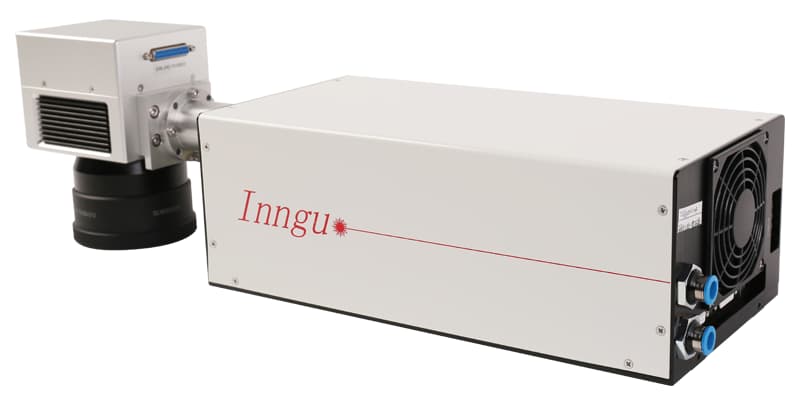
Diamond, as the hardest natural material on Earth, presents significant challenges for conventional mechanical processing methods such as diamond saws or scaife polishing. In recent years, solid-state laser technology, particularly the frequency-doubled Neodymium-doped Yttrium Aluminum Garnet (Nd:YAG) laser emitting at a wavelength of 532 nm (green light), has emerged as a highly efficient and precise tool for diamond cutting.
Principle of Operation
The YAG green laser is typically generated by passing the fundamental 1064 nm infrared output from an Nd:YAG laser through a nonlinear optical crystal (e.g., KTP or LBO), which doubles the frequency and halves the wavelength to 532 nm. This green wavelength is critical for diamond processing because natural and synthetic diamonds exhibit significantly higher optical absorption in the green–blue spectrum compared to the near-infrared. While diamond is almost transparent to 1064 nm radiation, the 532 nm green light is absorbed efficiently by the diamond lattice, enabling effective thermal interaction without requiring special coating or surface treatment.
Advantages for Diamond Cutting
-
High Absorption Efficiency – Unlike CO₂ lasers (10.6 µm) or fiber lasers (1.06 µm), which either reflect off diamond surfaces or pass through with minimal energy coupling, the 532 nm green laser achieves strong absorption across most diamond types, including high-purity stones. This allows clean material removal with lower peak power.
-
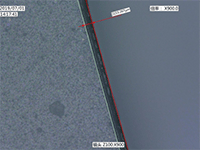
Small Heat Affected Zone (HAZ) – The short pulse durations (typically nanosecond or picosecond) possible with modern YAG green lasers minimize heat diffusion into the surrounding material. The result is a narrow kerf, reduced micro-cracking, and minimal graphitization along the cut edges – a common issue with longer-wavelength lasers.
-
Precision and Speed – With a focus spot size down to 10–20 µm, the green laser can perform intricate cuts, shape polishing pre-forms, and even kerfing for cleaving. Cutting speeds are several times faster than traditional mechanical methods, especially for complex geometries like hearts or marquise cuts.
-
Non-Contact Process – No mechanical tool wear or force application occurs, eliminating the risk of brittle fracture or chipping. This is particularly beneficial for thin diamond wafers used in electronics or for fragile industrial diamond components.
Typical Applications
-
Rough diamond sawing: Splitting large rough stones into smaller pieces for faceting.
-
Shaping and pre-forming: Rapid removal of unwanted material to approach final contour.
-
Laser scribing: Creating a shallow groove to guide mechanical cleaving along crystal planes.
-
Industrial diamond cutting: Processing polycrystalline diamond (PCD) and chemical vapor deposition (CVD) diamond wafers for cutting tools and heat spreaders.
Limitations and Considerations
Despite its advantages, YAG green laser cutting does have constraints. Graphitization – the conversion of diamond to amorphous carbon or graphite – can still occur if excessive energy density or slow scanning speeds are used. Proper parameter optimization (pulse energy, repetition rate, scan speed, and gas assist with argon or oxygen) is essential. Additionally, the equipment cost is higher than that of infrared lasers, though significantly lower than UV excimer or femtosecond lasers.
Conclusion
The YAG green laser (532 nm) has revolutionized diamond processing by combining the diamond’s natural absorption peak with precision laser technology. It offers a clean, fast, and controllable alternative to traditional mechanical cutting, enabling intricate shapes, higher yields, and reduced material waste. As diamond applications expand from jewelry to high-power electronics, quantum optics, and wear-resistant coatings, the YAG green laser will remain an indispensable tool in the diamond manufacturing industry.