- i want
- KNOW INNGU LASER
- BUSINESS CONSULTATION
-
SUPPORT
- Homepage
- About us
- Product Center
- Solutions
- News Center
- service and support
- Contact us

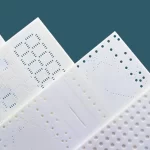
1. Glass Drilling
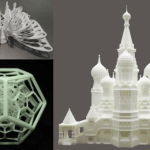
High-power green nanosecond lasers (typically at 532 nm wavelength) overcome the transparency challenge through a mechanism fundamentally different from thermal melting. Rather than relying on linear absorption which is negligible in clear glass at 532 nm, the ultra-short nanosecond pulses generate extremely high peak power densities (on the order of GW/cm²) at the focal point. This intense electromagnetic field triggers nonlinear absorption processes—principally multiphoton ionization and avalanche ionization—that instantaneously convert the transparent material into a localized plasma state. Since this nonlinear absorption is confined to the focal volume where intensity exceeds the threshold, material removal occurs with minimal heat diffusion into the surrounding bulk. As a result, green nanosecond lasers are widely characterized as a “cold light source” in glass processing applications, delivering high-quality drilling outcomes with virtually no thermal stress, micro-cracking, or edge chipping.
2. PCB Depaneling
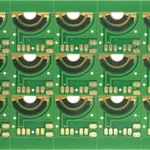
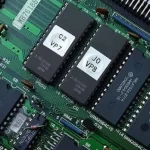
High-power green nanosecond lasers have emerged as a transformative solution to these challenges, offering non-contact, programmable singulation with minimal heat-affected zone (HAZ) and zero mechanical force. The 532 nm wavelength strikes an optimal balance: it is strongly absorbed by copper (the primary conductive material in PCBs) and many composite dielectrics, yet it can be precisely delivered through galvanometer-based scanning systems to achieve narrow kerfs (<50–100µm) with clean, char-minimized edges.