




What is an OPO Laser?
An Optical Parametric Oscillator (OPO) is a coherent light source based on nonlinear optical frequency conversion. Unlike conventional lasers that rely on stimulated emission from gain media, an OPO converts a fixed-frequency pump laser beam into two output beams of lower frequencies — traditionally referred to as the signal and the idler — through a process called parametric amplification. The sum of the signal and idler photon energies equals the pump photon energy.
By adjusting the phase-matching conditions of the nonlinear crystal, the output wavelengths can be tuned continuously over a wide spectral range, making OPOs one of the most versatile tunable laser sources available today.
Working Principle
The core of an OPO system consists of:
-
A pump laser: Typically a Q-switched Nd:YAG laser (1064 nm) or other solid-state lasers.
-
A nonlinear optical crystal: Materials such as Beta Barium Borate (BBO), Lithium Niobate (PPLN), or Potassium Titanyl Phosphate (KTP) are used to facilitate parametric conversion.
-
An optical resonator: Provides feedback for either the signal or idler wave to oscillate and build up intensity.
When the pump laser passes through the nonlinear crystal inside the resonator, a photon is spontaneously split into two lower-energy photons (signal and idler). With proper cavity feedback, this process builds up efficiently, producing coherent, high-power tunable output.
Key Advantages of OPO Technology
-
Wavelength Agility: OPOs offer seamless tunability from the ultraviolet (UV) to the mid-infrared (Mid-IR) — a single system can cover what would otherwise require multiple dye lasers or semiconductor lasers.
-
High Efficiency: Modern OPO designs achieve conversion efficiencies exceeding 50% from pump to tunable output.
-
All-Solid-State Reliability: No toxic dyes, flowing gases, or complex cryogenics; OPOs are maintenance-friendly and environmentally stable.
-
Fast Tuning: Computer-controlled phase-matching enables rapid wavelength scanning for time-resolved measurements.
Applications Across Industries
-
Scientific Research: Molecular spectroscopy, quantum optics, cold atom physics, and ultrafast science.
-
Environmental Monitoring: Lidar systems for measuring atmospheric gases, aerosol profiling, and pollution tracking.
-
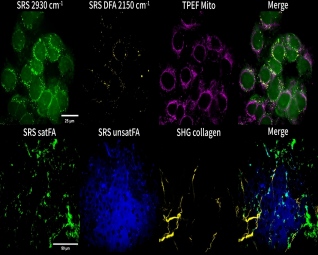
Biomedical Imaging: Photoacoustic tomography, nonlinear optical microscopy, and optical coherence tomography.
-
Industrial Inspection: Semiconductor wafer testing, non-destructive evaluation, and combustion diagnostics.
-
Defense & Security: Infrared countermeasures, stand-off detection of explosives, and remote chemical sensing.
Technological Maturity and Future Outlook
Over the past three decades, OPO lasers have transitioned from laboratory prototypes to commercial workhorses. Advances in periodically poled crystals, fiber-coupled pump lasers, and compact cavity designs have significantly reduced system footprint and cost. Modern OPO systems feature intelligent software, active stabilization, and modular architectures that allow integration into complex experimental setups or turnkey industrial instruments.
Emerging trends include fiber-laser-pumped OPOs for improved beam quality, high-power mid-infrared OPOs for material processing, and miniaturized OPOs for field-deployable sensing platforms.