



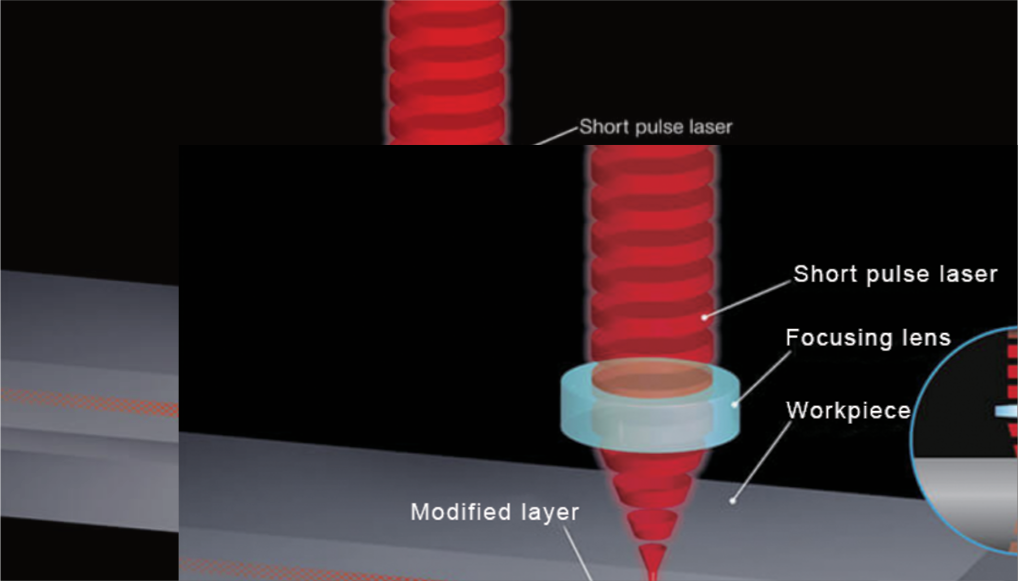
High Repetition Rate 266nm Picosecond Lasers: A Comprehensive Overview
1. Operating Principles
High repetition rate 266nm picosecond lasers generate deep ultraviolet (DUV) light through nonlinear frequency conversion of infrared or visible picosecond pulses. Two main technological approaches are employed:
a) Solid-State Mode-Locked Lasers
-
Seed Generation: Laser diodes pump a gain medium (e.g., Nd:YVO₄ or Nd:YAG). A saturable absorber mirror (SESAM) or nonlinear polarization rotation technique induces mode-locking, generating a continuous train of picosecond pulses at the fundamental wavelength (typically 1064 nm).
-
Amplification: The low-energy seed pulses are amplified through multiple stages to achieve the desired power level.
-
Frequency Conversion: The amplified infrared pulses pass through nonlinear crystals (LBO, BBO) for second and fourth harmonic generation, producing 266 nm DUV output.
b) Master Oscillator Fiber Amplifier (MOFA)
-
Seed Generation: A gain-switched laser diode serves as the master oscillator, generating low-power infrared picosecond pulses with widely tunable repetition rates.
-
Fiber Amplification: The seed pulses are injected into rare-earth-doped fiber amplifiers, boosting their energy while preserving temporal characteristics.
-
Harmonic Generation: The amplified pulses are frequency-converted to 266 nm through single-pass or multi-pass nonlinear crystals.
2. Application Scenarios
a) Scientific Research Applications
-
Atomic, Molecular, and Optical (AMO) Physics & Quantum Computing:
-
Ultra-high repetition rate lasers provide continuous, stable photon streams essential for atomic cooling, quantum state manipulation, and entangled photon pair generation.
-
The deep UV wavelength enables addressing specific electronic transitions in atoms and ions.
-
-
Time-Resolved Spectroscopy & Microscopy:
-
Widely tunable repetition rate lasers are ideal for Fluorescence Lifetime Imaging (FLIM), Förster Resonance Energy Transfer (FRET), and Fluorescence Correlation Spectroscopy (FCS).
-
The ability to match the repetition rate to the fluorescence lifetime of samples maximizes signal-to-noise ratio in time-correlated single photon counting (TCSPC) experiments.
-
-
Semiconductor Inspection:
-
The 266 nm wavelength offers diffraction-limited resolution below 200 nm, enabling detection of nanoscale defects on silicon wafers and photomasks.
-
High power stability (<0.75% RMS) ensures consistent inspection results over extended periods.
-
b) Industrial Applications
-
Micromachining and Material Processing:
-
High average power (1-8 W) combined with ultrashort pulse widths (<10 ps) enables “cold” ablation of virtually any material, including:
-
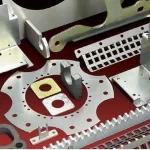
Brittle materials: Glass, sapphire, ceramics (minimal micro-cracking)
-
Semiconductors: Silicon wafer dicing, via drilling
-
Flexible electronics: OLED display scribing, polyimide cutting
-
-
The high repetition rate (kHz to MHz range) ensures rapid processing speeds suitable for industrial production.
-
-
Lift-Off Processes:
-
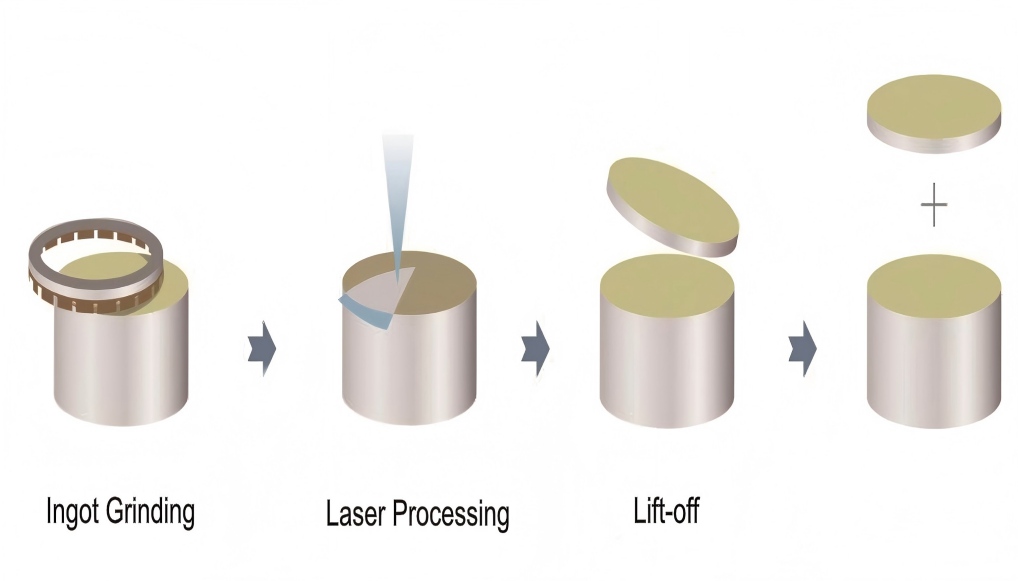
266 nm photons are efficiently absorbed by GaN and other wide-bandgap semiconductors, making these lasers ideal for LED lift-off from sapphire substrates.
-
Precise energy control minimizes damage to underlying layers.
-
The choice of a high repetition rate 266nm picosecond laser depends critically on the specific application requirements. Each technology platform—whether solid-state mode-locked, fiber-amplified, or high-power industrial—offers distinct advantages that make it the optimal choice for particular scientific or industrial challenges.