
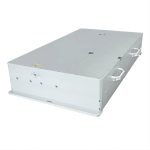
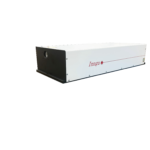
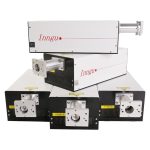



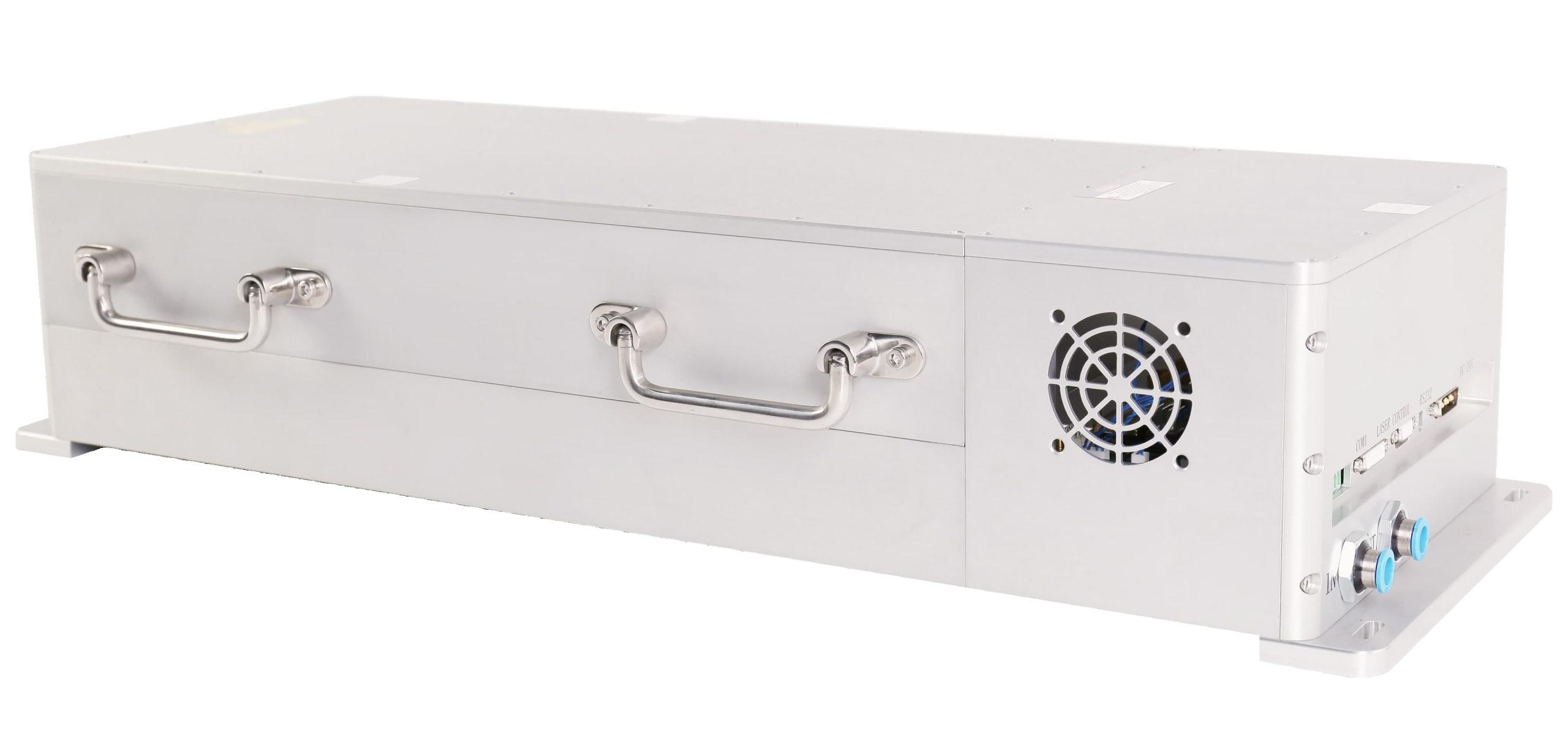
Green subnanosecond laser has short output wavelength and high processing accuracy and it has been widely applied in the fields of laser micromachining, laser medical treatment and non-linear optics. Green subnanosecond laser has the features including subnanosecond seed source which emits seed laser, multistage amplification structure of seed laser and conversion structure of frequency multiplication for the seed laser after amplification.
Conventional solid state green subnanosecond laser with low repetition frequency is not suitable for market applications. The green fibre subnanosecond laser on the market has very small single pulse energy which does not have good efficiency on cutting and advantages of low cost. The green subnanosecond laser of INNGU laser has high repetition frequency, high average power and high single pulse energy. The core team of INNGU laser is dedicated to the research of high power laser devices and related technologies and has acquired a series of important results. INNGU has made breakthrough in high repetition frequency, high average power and high single pulse energy, laying solid foundation for the practicalisation of green subnanosecond laser.
1. High Repetition Rate
Based on the research of laser crystal materials, INNGU has introduced the concept of repetition rate into laser crystals and enhanced the characteristics of repetition rate of green subnanosecond laser by adopting multiple low loss pump sources. There are two pumping ways that one is simultaneous emission of seed laser from multiple pump sources and the other is separate emission of seed laser from multiple pump sources. In the second way, each pump source emits the single wavelength of seed laser without the crossover effects of mixed multiple modes arose from the second wavelength. In addition, due to high single pulse energy, high repetition rate and good characteristics of repetition rate, the green subnanosecond of high repetition rate will have higher average power via multi stage amplification.
2. High average power
After achieving high repetition rate, the conversion efficiency of laser crystals needs to be improved in order to further enhance the application of laser crystal in green subnanosecond laser. The high average power is achieved by adopting the method based on the structure of multi stage amplification and combination of multi stage amplification and repetition rate conversion. By means of simultaneous seed laser emission via multiple low loss pump sources, adding seed laser amplifier and conversion amplifier of repetition rate in the pump source and combining the structure of multistage amplification structure with the conversion structure of repetition rate. The structure has achieved high average power and high single pulse energy.
After high repetition frequency, the seed laser which is emitted from several pump sources of different wavelengths is amplified in cascade after it is emitted from each pump source into several pump sources by using the structure of multi stage amplification and repetition rate conversion.
In the process of cascade amplification, when the frequency of seed laser is greater than or equal to the cavity length of pump source, the multi frequency conversion of the seed laser is completed. And when the frequency of seed laser is less than the cavity length of pump source, the multi stage amplification of pump source is completed.
The high power density can be obtained by simultaneous amplification of multiple pump sources. The structure of multi stage amplification and multi frequency conversion has effectively increased single pulse energy, providing a new way of sub-nanosecond green laser.