
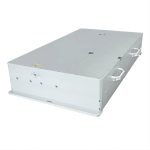




A Green Nanosecond Laser is a solid-state or diode-pumped laser system that emits pulsed light at a wavelength of 532 nm, corresponding to the green region of the visible spectrum. It is typically generated by frequency-doubling the fundamental 1064 nm output of a Nd:YAG, Nd:YVO₄, or similar laser medium using a nonlinear crystal such as KTP, BBO, or LBO. The “nanosecond” designation refers to the pulse duration, which typically ranges from 1 to 100 nanoseconds, enabling high peak power with moderate pulse energy.
Key Characteristics
-
Wavelength: 532 nm (Green)
-
Pulse Duration: Typically 1 – 100 ns
-
Repetition Rate: From single-shot to >100 kHz (model-dependent)
-
Pulse Energy: From microjoules to hundreds of millijoules
-
Average Power: Milliwatts to tens of watts
-
Beam Quality: Diffraction-limited (M² < 1.3) in high-grade systems
Working Principle
Green nanosecond lasers are commonly realized through diode-pumped solid-state (DPSS) architectures. The gain medium emits at 1064 nm, and an intracavity or extracavity frequency-doubling stage converts the infrared light to 532 nm. Q-switching—either active or passive—is employed to generate nanosecond pulses by modulating the cavity Q-factor, allowing energy storage and sudden release in short, intense bursts.
Advantages
-
High Peak Power: Enables nonlinear processes and material ablation with minimal heat diffusion.
-
Visible Wavelength: Easier alignment, better absorption in certain materials (e.g., metals, semiconductors, polymers).
-
Spatial Coherence: Diffraction-limited beam quality for tight focusing.
-
Reliability: All-solid-state design ensures long operational lifetime and low maintenance.
-
Flexibility: Available in both low-power (alignment, sensing) and high-power (industrial processing) variants.
Applications
1. Industrial Micromachining & Precision Manufacturing
Green nanosecond lasers are widely adopted in high-precision material processing due to their high absorption in metals and minimal thermal damage.
-
Metal processing: Drilling, cutting, and surface structuring of stainless steel, aluminum, copper, and gold with reduced burr formation.
-
Ceramic and hard material scribing: Used in LTCC (low-temperature co-fired ceramic) and alumina substrate separation for microelectronics.
-
Flexible circuit processing: Ablation of cover layers on polyimide films without damaging underlying copper traces.
-
Glass and sapphire cutting: High peak power enables stealth dicing and controlled microcrack propagation.
2. Solar Cell and Photovoltaic Manufacturing
Green lasers are essential tools in the production of high-efficiency solar cells.
-
Edge isolation: Removing conductive layers along cell edges to prevent shunting.
-
Selective emitter doping: Localized heating for dopant diffusion, improving carrier collection.
-
Laser-fired contacts (LFC): Creating rear-side point contacts in passivated emitter rear cells (PERC).
-
Thin-film scribing: Patterning of CIGS, CdTe, and amorphous silicon panels with high precision and minimal peripheral damage.
3. Medical and Aesthetic Treatments
The strong absorption of 532 nm light in hemoglobin and melanin makes green nanosecond lasers highly effective in medical applications.
-
Tattoo removal: Photomechanical fragmentation of ink particles, particularly effective for red, orange, and yellow pigments.
-
Pigmented lesion therapy: Treatment of lentigines, freckles, and café-au-lait macules.
-
Vascular lesion therapy: Selective photothermolysis of telangiectasias, port wine stains, and hemangiomas.
-
Ophthalmology: Sealing retinal tears and treating subfoveal choroidal neovascularization.
-
Dentistry: Soft tissue ablation, gingival depigmentation, and laser-assisted periodontal therapy.
4. Scientific Research and Instrumentation
Green nanosecond lasers serve as reliable pulsed sources in numerous laboratory and field-deployed instruments.
-
Time-resolved fluorescence spectroscopy: Pulsed excitation for studying molecular dynamics and lifetime measurements.
-
LIDAR (Light Detection and Ranging): Atmospheric aerosol profiling, cloud height measurement, and wind speed detection, particularly in green-sensitive detector systems.
-
Pump-probe spectroscopy: High peak power for exciting nonlinear phenomena in materials science.
-
Particle image velocimetry (PIV): Illumination of tracer particles in fluid dynamics experiments.
-
Calibration sources: Alignment and sensitivity testing for optical detectors and imaging systems.
5. Semiconductor and Electronics Industry
As device geometries shrink, green lasers provide a balance of resolution and throughput.
-
Wafer dicing: Singulation of thin or low-k wafers with reduced chipping compared to blade saws.
-
Memory repair: Cutting polysilicon fuses in DRAM and logic devices.
-
Laser marking and coding: High-contrast, oxidation-free markings on IC packages, connectors, and enclosures.
-
PCB depaneling: Singulation of assembled circuit boards without mechanical stress.
6. Display and Metrology
Green’s high visibility to the human eye enables a variety of imaging and alignment applications.
-
Phosphor excitation: Laser-driven phosphor illumination for high-brightness projection and microscopy.
-
Interferometry: Coherent illumination for surface profilometry and optical testing.
-
Laser line generation: 3D profiling and machine vision illumination.
-
Flow cytometry: Fluorescence excitation in cell sorting and analysis systems.
7. Emerging and Specialized Applications
-
Cultural heritage conservation: Cleaning stone artifacts, removing encrustations from marble, and laser ablation of surface contaminants.
-
Agricultural and food processing: Laser marking for traceability on fruits, vegetables, and packaged goods.
-
Aerospace component marking: Permanent, high-contrast identification on turbine blades and structural parts.
-
Defense and security: Green laser dazzlers, rangefinders, and target designators.
Comparison with Other Wavelengths
Green nanosecond lasers offer superior absorption in metals compared to infrared, and better scattering tolerance in transparent materials compared to UV. While UV lasers provide higher resolution, green systems generally deliver higher power and lower cost per watt. Compared to picosecond and femtosecond lasers, nanosecond green sources offer lower system complexity and cost while still addressing a wide range of microprocessing tasks.