








Introduction to 266 nm Subnanosecond Lasers: Precision at the Deep Ultraviolet Frontier
The 266 nm subnanosecond laser stands as a pinnacle of modern solid-state laser engineering, merging the unique advantages of deep ultraviolet (DUV) radiation with the extreme temporal compression of subnanosecond pulses. By delivering high-energy photons in bursts lasting less than a billionth of a second, these systems achieve a formidable combination of short wavelength and high peak power, enabling interactions with matter that are both highly precise and minimally invasive.
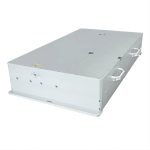
These lasers are typically realized as diode-pumped solid-state (DPSS) systems. The process begins with a compact oscillator, often a passively Q-switched microchip laser, which generates infrared pulses (typically at 1064 nm) with durations well below one nanosecond. This initial stage of pulse compression is critical, as it concentrates energy into an exceptionally brief window, resulting in peak powers ranging from kilowatts to megawatts. This high peak intensity is then harnessed for efficient nonlinear frequency conversion. The infrared beam is successively passed through a series of specialized crystals, such as Lithium Triborate (LBO) for second harmonic generation to 532 nm and Beta Barium Borate (BBO) for fourth harmonic generation to the target wavelength of 266 nm. The high peak power of the fundamental pulse drives this conversion chain with remarkable efficiency, often eliminating the need for complex external amplification.
The resulting output—deep ultraviolet light in subnanosecond pulses—possesses a distinctive set of physical attributes. The 266 nm wavelength offers high photon energy, allowing for direct bond breaking in materials (photochemical ablation) rather than melting or vaporization. Simultaneously, the ultrashort pulse duration ensures that energy is deposited into the target material faster than it can conduct away as heat, a regime often termed “cold processing.” This synergy of short wavelength and short pulse minimizes thermal damage, micro-cracking, and recast layers, achieving feature sizes and surface qualities unattainable with longer pulses or continuous-wave lasers.
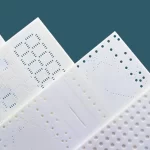
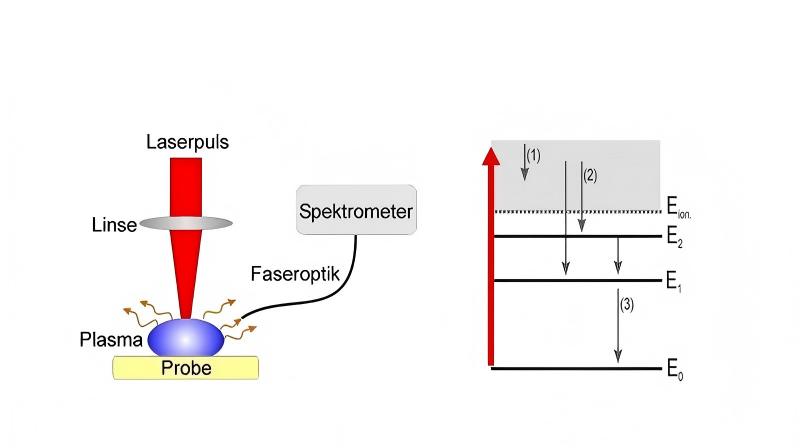
These unique characteristics have established 266 nm subnanosecond lasers as indispensable tools across a range of demanding fields. In industrial micromachining, they are the gold standard for high-precision tasks such as scribing sapphire, cutting thin glass for foldable displays, drilling microvias in printed circuit boards, and structuring polymers for medical implants. In analytical science, they serve as powerful excitation sources for techniques like Laser-Induced Breakdown Spectroscopy (LIBS) and Raman spectroscopy, where the short wavelength can enhance signal strength and reduce fluorescent background interference. Their high peak power also makes them ideal for long-range applications, including LIDAR for atmospheric monitoring and environmental sensing. Furthermore, in the biomedical sector, their ability to ablate tissue with minimal collateral damage is leveraged in advanced ophthalmic and dermatological procedures.
In essence, the 266 nm subnanosecond laser represents a convergence of extreme optical properties. By delivering intense, cold pulses of ultraviolet light, it continues to push the boundaries of what is possible in precision manufacturing, cutting-edge research, and delicate medical intervention.